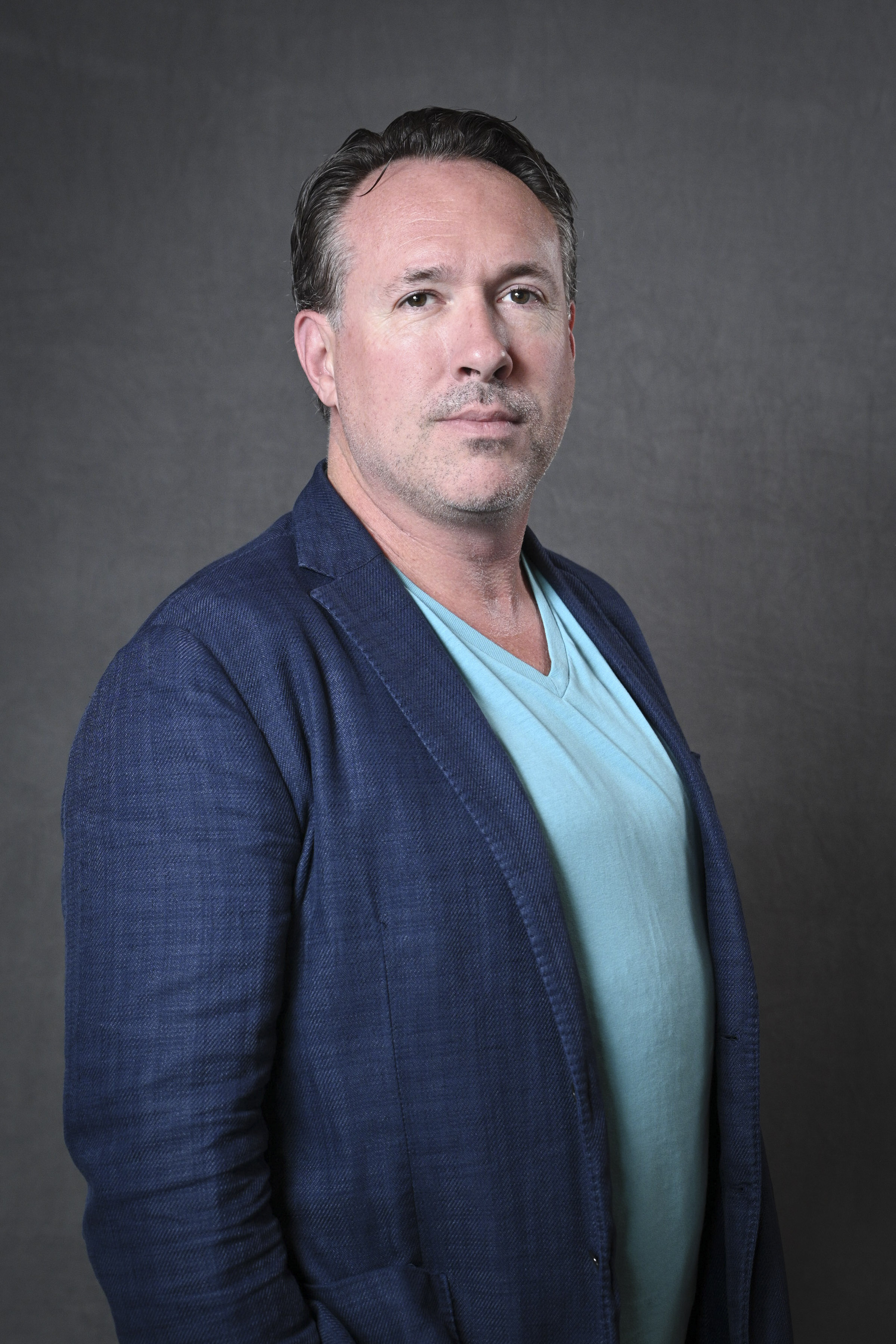
Why I work the way I do
I don't follow the standard consulting playbook — not because I haven't read it, but because I've watched it fail in enough board rooms and PE portfolios to know where the gaps are. My instinct is to forge new paths when the path forward is unclear. That's served me across every phase of my career, and it's the lens I bring to every engagement.
I started in the U.S. Air Force — Aerospace Technology. Not business school. That environment gave me something most advisors don't have: a deep instinct for precision, accountability, and mission clarity before you act. Then I went sideways — into technology, product, startups, and eventually enterprise scale — and never stopped going sideways.
The operating career behind the frameworks
The books: frameworks built from the inside
I write because the frameworks I needed didn't exist. The AI-Native Organization came from watching boards and PE firms try to govern AI with tools designed for software procurement. The 7 Hats came from watching product leaders fail not because they lacked skills, but because they couldn't read which mode the situation demanded. What's My Idea Worth? came from watching founders waste years on ideas the market couldn't support.
These aren't thought leadership pieces. They're operational blueprints that I use in live engagements, and the reason clients engage me before the engagement begins.
What I actually believe
On AI governance
AI is not a technology problem. It's a governance problem. The boards losing ground are behind on decision rights, not on tooling. Most AI programs fail at the accountability layer, not the technology layer.
On conventional playbooks
The consulting industry has a playbook because playbooks are sellable. They're also increasingly wrong. The moments that matter — post-acquisition, AI transformation, leadership transition — require original thinking, not templated advice.
On PE value creation
Most value destruction in PE happens between months 6 and 18. Not at acquisition. Not at exit. In the operational gap where the thesis meets the reality of the actual business.
On advisory work
I'm not an advisor who sends decks. When I'm in an engagement, I'm accountable for the outcome. That changes the quality of the work and the nature of the conversation.
What it's like to work with me
I'll tell you what I actually think. Not what's comfortable. Not what protects the engagement. If I see something that's broken, you'll hear it directly.
I work from the inside, not the outside. I attend the meetings, make the calls, and own the results. Consulting from the slide deck is not how I operate.
I take on a small number of engagements at a time. Intentionally. If I can't give your work the attention it requires, I'll tell you before we start.
I bring original thinking, not a repackaged framework. Five published works means I've already done the framework work. What I bring to you is the application — and the judgment that comes from doing it for real.
I'm long-term oriented. Most of my client relationships outlast the initial engagement. I'm not optimizing for the next invoice.
Why the combination is rare
Most executives have operated in one context: startup or enterprise, product or P&L, private sector or government. My career has crossed all of them — from Air Force mission systems to a $1.2B commercial P&L to Defense and Intelligence AI programs at Microsoft to founding and exiting a company. That span isn't biographical trivia. It means I can translate between a board's risk vocabulary and an engineering team's execution reality, between an investor's thesis and the constraints of an operating team under pressure. Few people who understand AI governance also understand how operating models actually break. Fewer still have built and exited a company, run a billion-dollar P&L, and advised at the board level. The pattern recognition carries because the context range is unusual.
If any of this sounds like what your board or portfolio needs — let's talk.
Discovery calls are 30 minutes. No pitch. I'll tell you directly whether I can help — and if I can't, I'll point you toward someone who can.
Schedule a Discovery Call